


The Wildcats have reached the Sweet Sixteen for the third year in a row and the fourth time in the five years under Coach Tommy Lloyd. But as I said last week, once we are at this point, everyone is good, and on the right (or wrong) day, everyone could win or lose.
Sweet Sixteen Preview
Arkansas finished second in the SEC regular season and won the tournament championship. The Razorbacks have played 12 ranked opponents, going 5-7. As far as common opponents, they have played Texas Tech (W), Houston (L), Auburn (1-1), Alabama (L), and Florida (L).
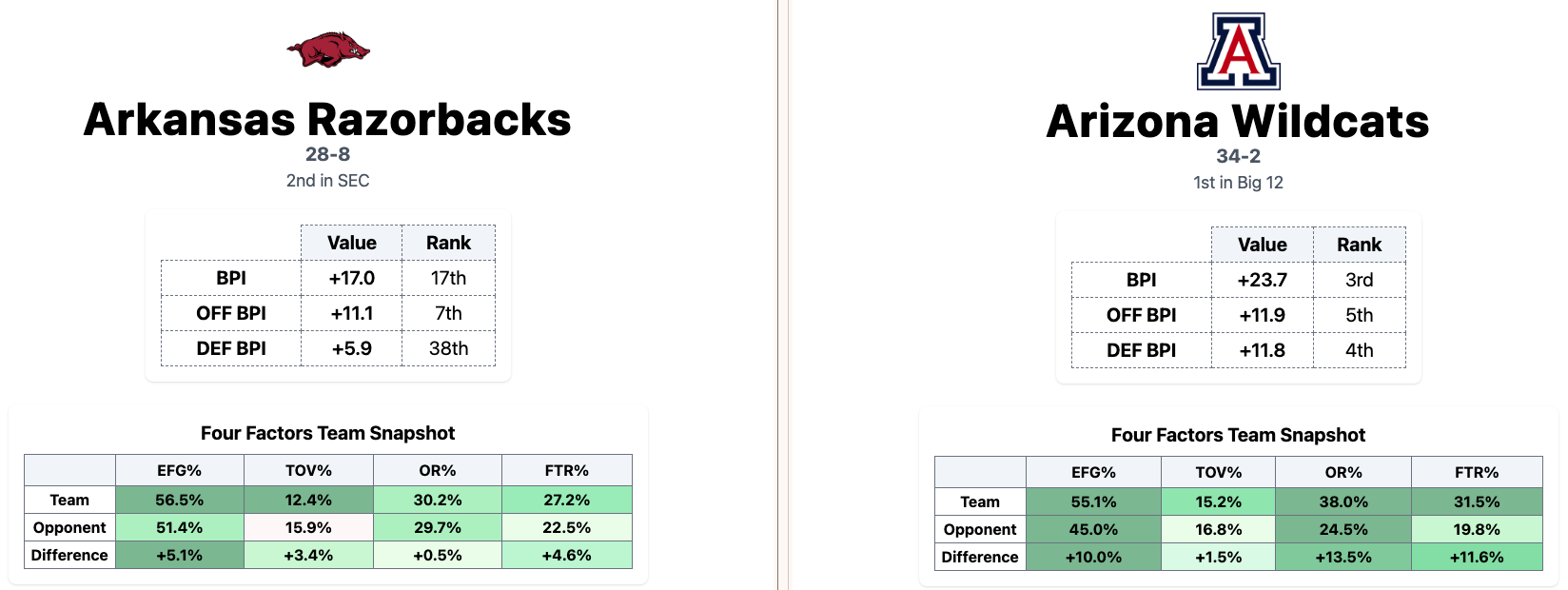
(Source: ESPN Analytics)
BPI, KenPom, and EvanMiya rate Arkansas between the 15th and 17th best team in the country. They have an electric offensive, led by First Team All-American point guard Darius Acuff. They are good to great at each of the four factors, better in shooting and taking care of the ball than the Wildcats, but are not quite as strong at offensive rebounding or getting to the foul line.
Arizona has faced two other First Team All-Americans already this year. AJ Dybantsa scored 24 points on 6-24 shooting and 35 points on 13-28 shooting. JT Toppin scored 31 points on 13-22 shooting. If that pattern holds, expect Acuff to get his, but maybe not in the most efficient manner.
Defensively, they are not nearly as strong, although still better than the Utah State team that just gave the Cats some trouble. The main issue is that their guards, Acuff especially, are not strong on that side of the ball. They do not cause many turnovers nor hold teams to a good percentage and they give up a decent number of rebounds because their big men are out of position helping their guards.

All signs point to Nick Pringle being back after missing the first weekend with a hamstring injury. That gives them another body to throw at the posts alongside Trevon Brazile and Malique Ewin (6’10” 220). Even with Pringle, the Razorbacks will likely only play seven players with DJ Wagner (6’4” 190) being the last.
Arizona still has a size advantage while Arkansas is one of the highest pace teams in the country. They average the most fast break points per game and turn the ball over on the lowest percentage of possessions of any team in D1.
The Razorbacks have shot 38.7% from three, also near the top in the nation. But they don’t shoot a ton of them, less than five more per game than the Wildcats. Their 3PAr is 13th percentile in the country. Arizona’s is 1st percentile.
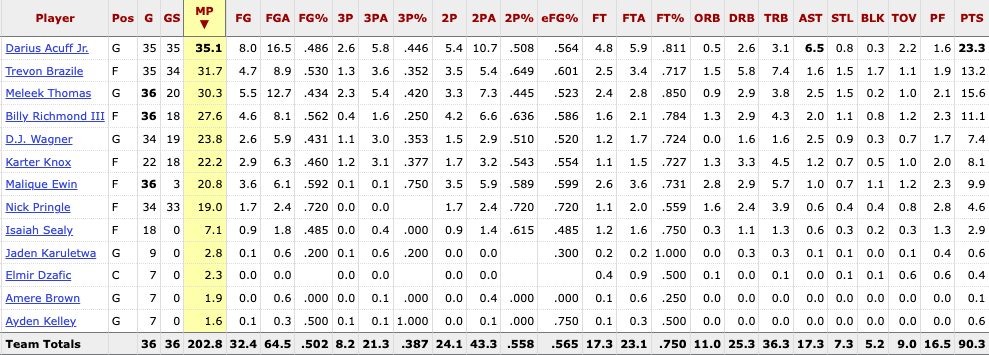
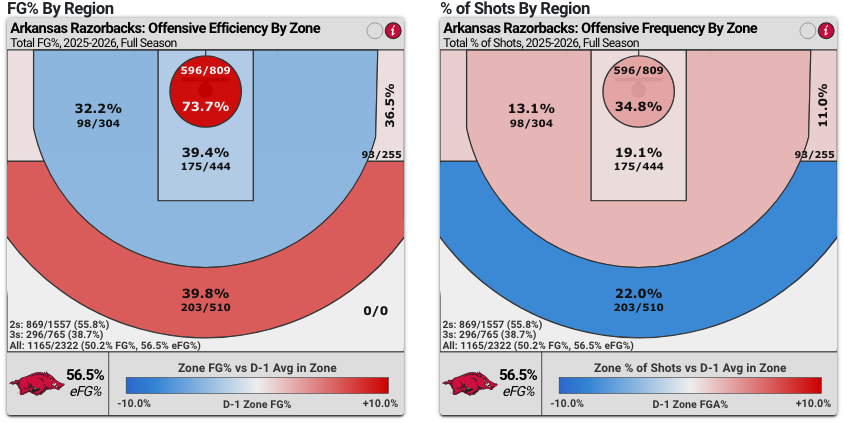
(Source: Basketball Reference and CBB Analytics)
First Weekend Breakdown
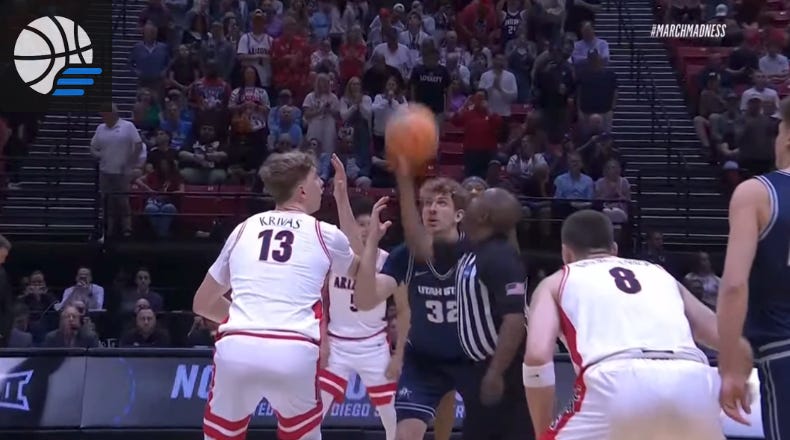
After demolishing LIU, there was a lot of chatter about how poorly Arizona played in the second round against Utah State, including Charles Barkley saying at halftime that they played their worst half of the year, even though they led by nine.
The Cats never trailed.1 By ESPN’s win probability model, their lowest WP was 82.2%, which, believe it or not, was at the opening tip. The lowest in the second half was 82.7% with 6:14 remaining and a 58-54 lead. And this was not against a low-major LIU squad; Utah State is a very good team.
Here are major topics we hit in the game preview:
Utah State’s eFG% is elite, 57.2% (96th percentile). Arizona held Utah State to 45.3% eFG% and shot a better number themselves.
Utah State is bad about putting opponents to the foul line (.29 FTr). Arizona got to the line at a FTr of .70.
Utah State turns teams over 20.8% of possessions (95th percentile). Arizona turned the ball over on 17.3% of possessions. The target I suggested was 10.8 turnovers, their season average. The Wildcats had 11.
Utah State is a poor defensive rebounding team at 29.5% opponent ORB%. Arizona grabbed 55% of their own misses.
So overall, I saw a pretty good basketball game from a team I still think is playing like the best in the country. Let’s rip through some other things I saw:
Pressbreak
Alright, we can hit the negatives too. Unfortunately, like we discussed after the losses, as amazing as this team is, they are not immune to the Rubber Band Effect. They get up in games and then let off the gas.
In fact, the Aggies had already cut the lead from 18 to 8 before they even started to press. Here is the list of Arizona possessions in that timeframe:
Peat turnover, Peat missed layup, Burries turnover, Dell’Orso missed three, Burries made two FTs, Awaka made one of two FTs, Dell’Orso missed three, Awaka made one of two FTs.
That is four points in eight possessions.2 And again, that is before they struggled with the press. Here are the first four press possessions: two turnovers, one lucky foul, and one set started with 15 on the shot clock.
The Wildcats’ positioning was rough against this 2-2-1 press, as they appeared to set up in a 2-2-1 as well. With Krivas up the floor but not wide, there was a lot of pressure on the second line of Cats to get open.
Utah State coach Jerrod Calhoun caught some flack for pulling the press a few minutes later. But by the fifth and sixth possessions, Arizona had done a better job flashing someone to the middle to make the second line of the Aggies’ D make a decision to take away that pass or go to trap.
One reason for the Rubber Band Effect is the tendency of leading teams to play passively. There is a time in the game where it is more valuable to run clock than to optimize offense on a possession. That time is not more than a couple of minutes left in the game, yet this Arizona team has a habit of slowing things down before that. I loved seeing Jaden Bradley attack the rim for the and-one. If a team is going to press, you have to make them pay.
Bench Rotation
Standard warning: single game plus-minus is incredibly noisy. Tobe Awaka was -13 in this game and Anthony Dell’Orso was -11.
Awaka played only 13 minutes, his fewest this season. Dwayne Aristode played only 3 minutes.
Coach Lloyd is tightening the rotation, which is more or less down to seven guys. The starters played 165/200 minutes and starter-only minutes accounted for nearly half the game (19:32).
Mo Krivas Passing
I was asked last week who my favorite player on this Arizona team was and after my mind spun for a moment over a really awesome all-around roster, I answered Ivan Kharchenkov, who I have written about many times this year.
Upon reflection, that is just not correct. Three months ago, I wrote that Krivas was the least replaceable player on this team.3 And until about a month ago, he remained hidden from the national discourse or from draft boards, despite my calls for him to be national defensive player of the year starting in December.
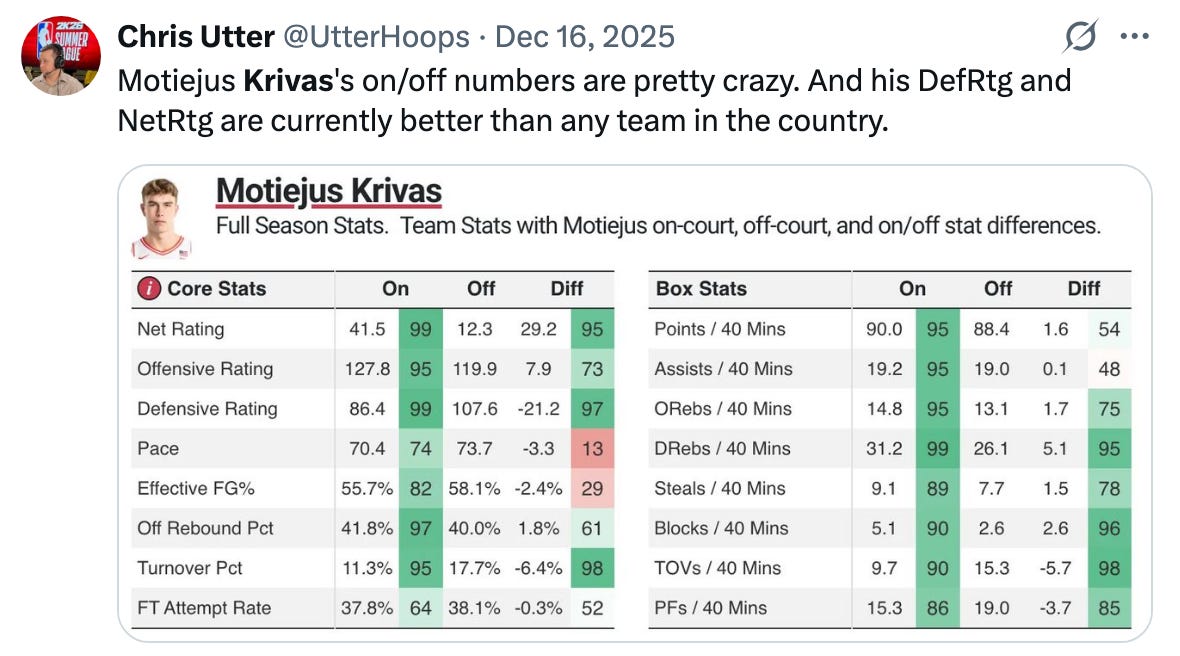
But the secret is out. I am now of the opinion that Krivas is more likely than not to be drafted in the first round of this year’s NBA draft. And if he keeps showing off additional skills like these passes, that stock is going to keep rising.
Burries End of Half Clock Awareness
Some good and some bad here. First, I’m a sucker for the walk-the-dog so here is Brayden Burries helping to waste eight seconds of clock after the LIU basket, bringing the shot clock and game clock differential down to two seconds.
But just like we discussed last week, Burries again went too early in this possession giving up the advantage he had just created and giving LIU the ball back with eight seconds remaining.
Luckily, Koa Peat stopped the transition with what I think was the first charge taken by a post this season.
Fouls to Give
The end of the half versus Utah State was not great either. Anthony Dell’Orso used Arizona’s foul to give with 9.6 seconds left, 40 feet away from the basket. He then got backcut for a layup on the ensuing inbounds.
That is both way too early and way too far away to give that foul. The idea would be for the offense to run the clock down and then when they start to attack, give the foul. That would put them in a tougher situation, taking the ball out of bounds (on the baseline hopefully) with say 3-4 seconds left.
The art of giving fouls was a popular topic this week. For those who watched the end of the St. John’s / Kansas game, Darryn Peterson made two free throws to tie the game with 14.1 seconds left and 2 team fouls. Kansas proceeded to give fouls at 13.1, 11.3, 6.8, and 3.9, all of which occurred in the backcourt. Dylan Darling then drove in and laid the ball in to win the game.
My thoughts:
Kansas is tied. Because of this, I would not give more than one foul because it puts personal fouls and team fouls on your team that could matter in overtime.
When a player gives a foul, I much prefer they get in on the ball and separate it from the ball handler. Maybe the official doesn’t call a foul. But don’t just go tap the ball handler on the back.
Similar to Arizona, try to run some clock. The first two fouls took all of 2.8 seconds off.
Don’t go all the way to six team fouls, because now the defense is scared to foul. Plus, you might actually accidentally foul and send your opponent to the line for the bonus.
In another game, Florida tried to give a foul up 2 with 8.9 seconds left, but failed to do so leading to a game-winning open three for Alvaro Folgueiras.4 The thought process: a foul takes a regulation loss out of the equation. Even if Iowa makes two free throws, Florida gets the ball back tied with a chance to win it. Worst case scenario is overtime.
Some are skeptical, but Florida Coach, Todd Golden5 has long been a follower of some of these analytics-backed strategies. While at San Francisco, his teams would frequently foul at the end of the first half when the shot clock was off so his team could get another possession. Give some thought to that one.
Floppy!
Another item we hit last week was Arizona’s increased use of pindowns. Well it wasn’t on a sideline out-of-bounds (SLOB) but rather an after-time-out (ATO), but the Wildcats went full floppy for the first time this season.
Appreciate SVG using the telestrator to show Burries screening for Kharchenkov, followed by both players coming off pindowns. Also, for all the point guards, just a masterful job by Jaden Bradley to lean towards the left side to drag his man a step away before the throw back to his right which led to Burries nailing a jumper on the curl.
First Half Challenges
Team Lloyd is now 6-0 on the season on challenges after overturning an out-of-bounds call with 6:05 remaining in the first half versus LIU.
However, this triggered a discussion between announcers Kevin Harlen, Stan Van Gundy, and Robbie Hummel about whether or not they would ever challenge in the first half. All these guys know more basketball than I do, but I think especially SVG may not recognize the significant differences between the college challenge system and the NBA system he is more familiar with.
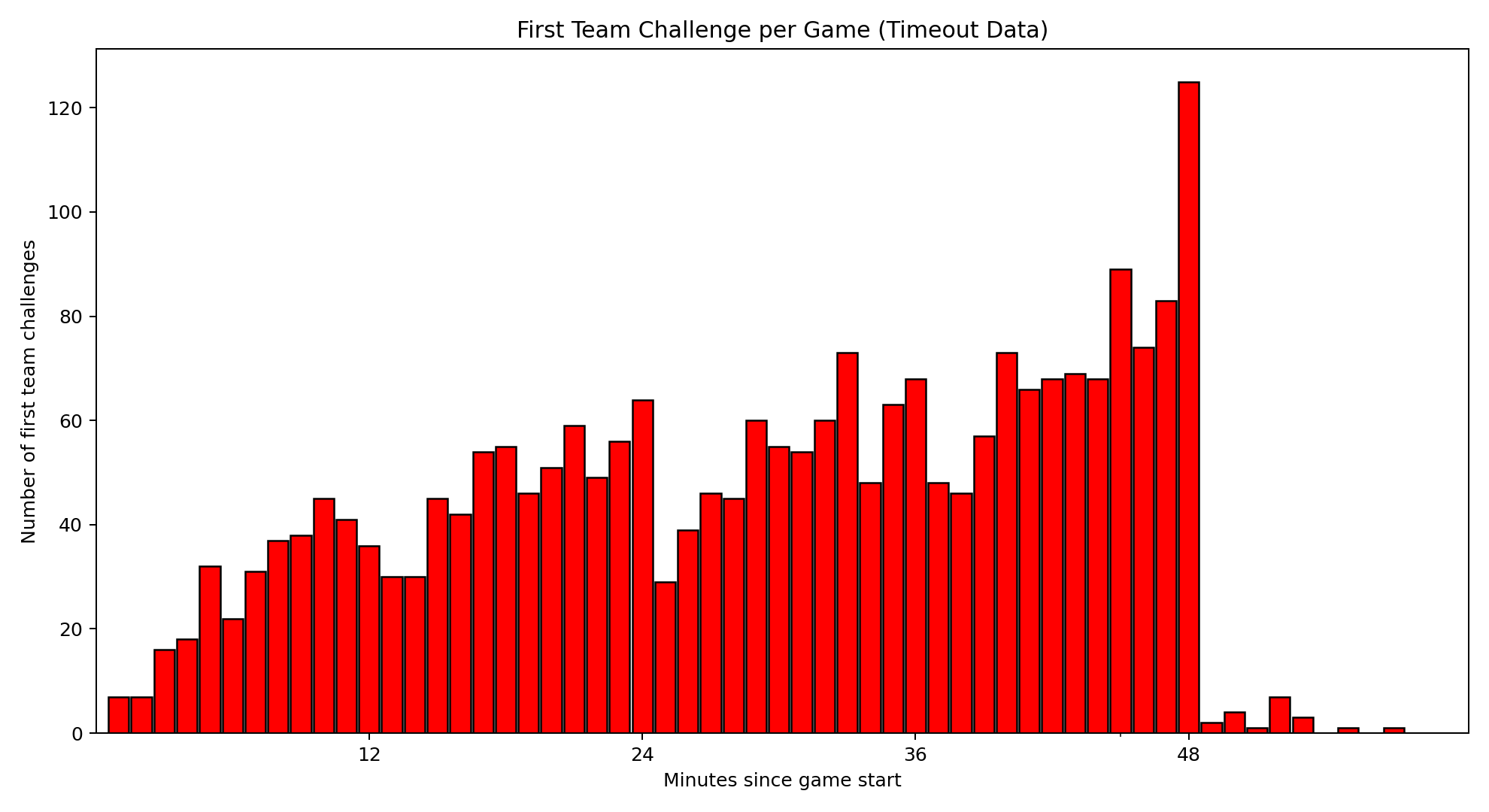
Van Gundy mentioned that NBA teams like to hold challenges until the end of the game. This is partially true. Most challenges occur near the end of regulation, and especially in the last minute.
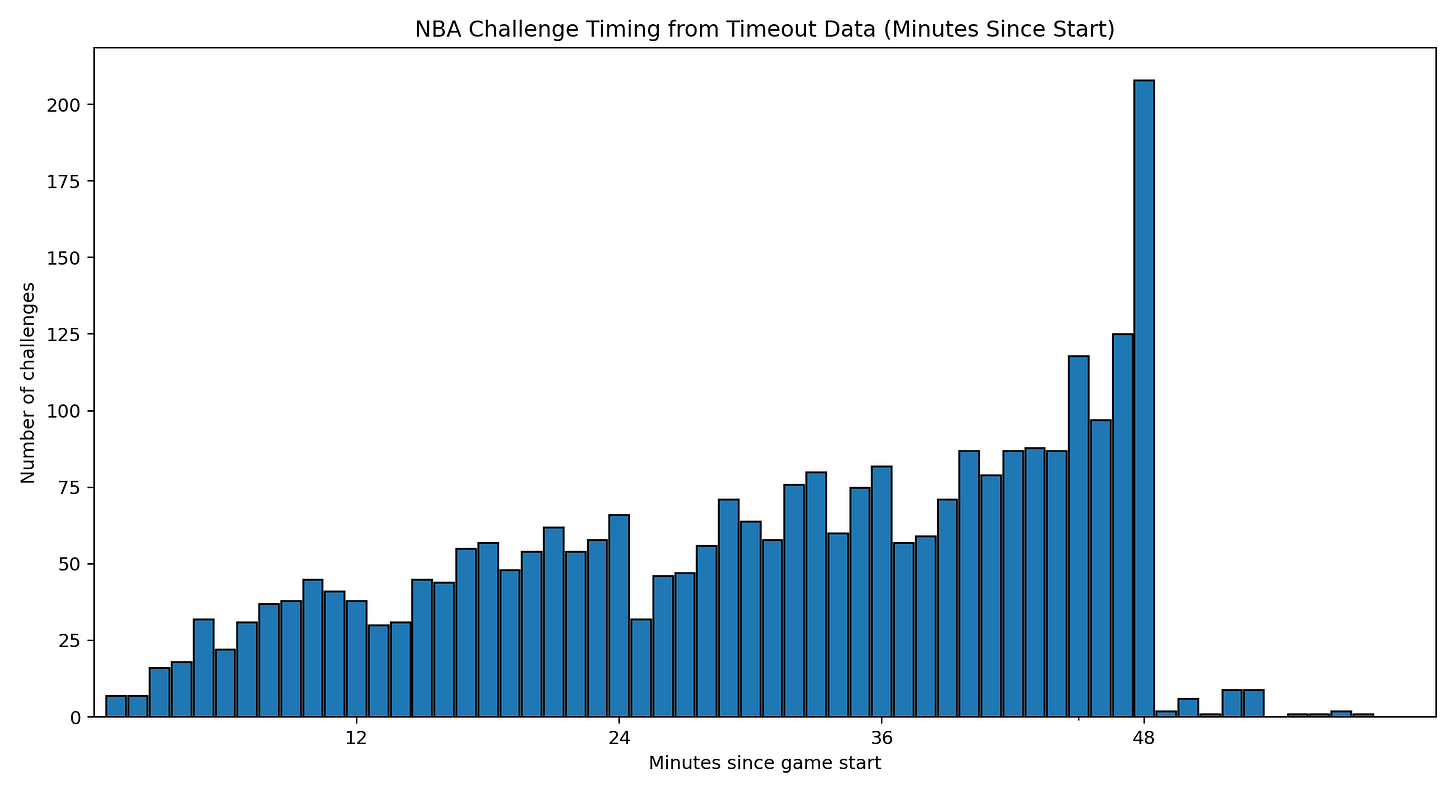
Above are all the challenges (2,878) made by NBA coaches in the 2023-2024 and 2024-2025 regular seasons. But like in college, teams get a second challenge if they get the first correct. So, what we are really interested in here is the timing of the first challenge.
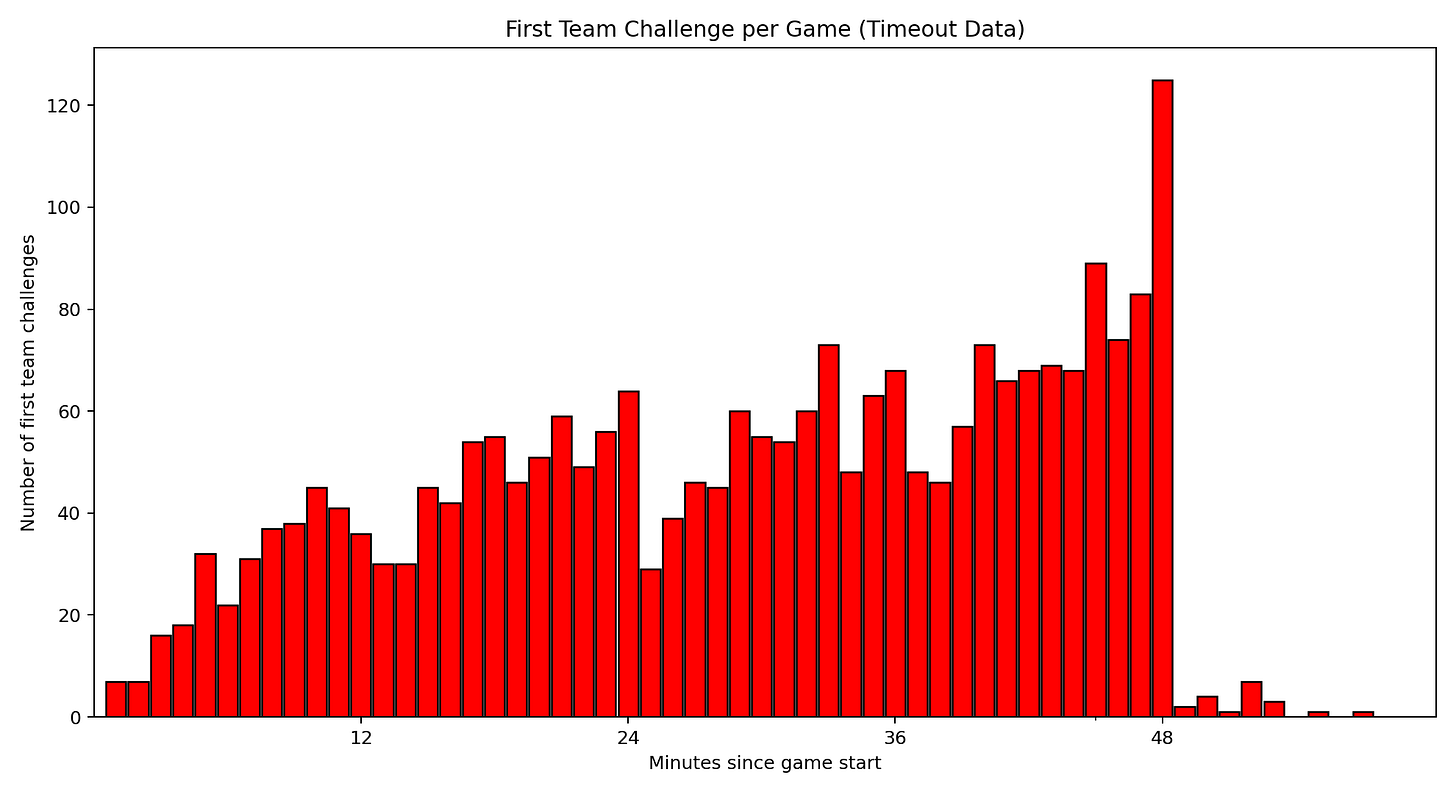
Of the first challenges by a team in a game, 37.4% were used in the first half (911 / 2436). So to say NBA coaches all hold their challenges until the end of the game is not accurate.
For reasons to be explained later6, there are more challenges used towards the end of each respective quarter than the beginning of the next quarter. Also, there are increases in the number of challenges at the end of the third quarter and before the 3:00 mark in the fourth quarter. Why?
NBA rules allow teams to carry only four timeouts into the fourth quarter and only two timeouts into the last 3:00. Because of this, there are situations where teams are about to forfeit a timeout and are more willing to risk a challenge right before these deadlines.
But college basketball’s timeout forfeiture happens only once, at the end of the first half. Therefore, coaches who have not yet used a timeout should similarly be more inclined to challenge near the end of the first half.This is the biggest difference: you cannot challenge most fouls in college basketball.7 Almost every challenge I have witnessed this year has been an out-of-bounds call. Houston lost a challenge trying to reverse a basket interference call in the Big 12 tournament and I believe I witnessed one restricted arc challenge earlier in the year, but that is all that I can remember.
Put simply, that means there is much less of a chance you will need that challenge later in the game. Arizona has now used 6 challenges in 36 games.I wrote about NBA challenge strategy last fall. In addition to the likelihood of winning a challenge, teams also take into account the value of winning said challenge. A team could potentially get a play that was originally called an and-one three pointer overturned into a leg-kick offensive foul. That challenge win is worth about 3.8 points.
But an out-of-bounds call is almost always worth the value of one possession (~1.0 points). College teams don’t need to do as much arithmetic because, as discussed above, almost every challenge is an out-of-bounds call.8
And of course, two days later, another challengeable situation presented itself, this time only three minutes into the game.
Should Arizona have challenged this call? Given what we are able to see at home, yes.
There was clear video evidence that the ball last touched Adlan Elamin. But I recognize that what Liam Lloyd is able to see on his tablet in the 10-20 seconds he’s afforded to make a decision, might not be as certain. However, if you rewatch the Arizona bench, nearly everyone close to the play already knew who the ball was off of.
Whether SVG could actually read Coach Lloyd’s lips across the floor or not, he asserted that Coach Lloyd’s decision not to challenge had more to do with the timing in the game than with his belief he could overturn the call. If that’s the case, I think that’s a bad way to go about it.
It’s nice to be undefeated in your challenge record. But if you never get to a situation where you wish you could challenge but have already used all your challenges, or to a situation where you wished you could take a timeout that you lost in a challenge, then you are not challenging enough.
For those on timeout watch, Arizona forfeited timeouts at the half in both games this weekend, the 14th and 15th occurrences this year.
Return of the BLOB
Arizona had 11 baseline out-of-bounds plays vs Utah State, their most of the season. Enjoy!
Coaching Situation and State of College Hoops
Coach Lloyd is a very good college basketball coach. Many programs would love to have him as their head coach. So when his name comes up in rumors about jobs like North Carolina or Kansas, the latter of which is not even open, it should not come as a surprise.9
Arizona is a great basketball program. But it is neither a blue blood nor is it in one of the wealthiest athletic departments in the country. Arizona is a Tier Two basketball program and the strongest on the west coast.10
Of the two factors: brand vs. financial resources, it is clear that the importance is shifting towards the latter. What equilibrium that will find in the long run is debatable with NCAA rules shifting yearly. If a true salary cap were implemented, the power would shift back towards the blue bloods.
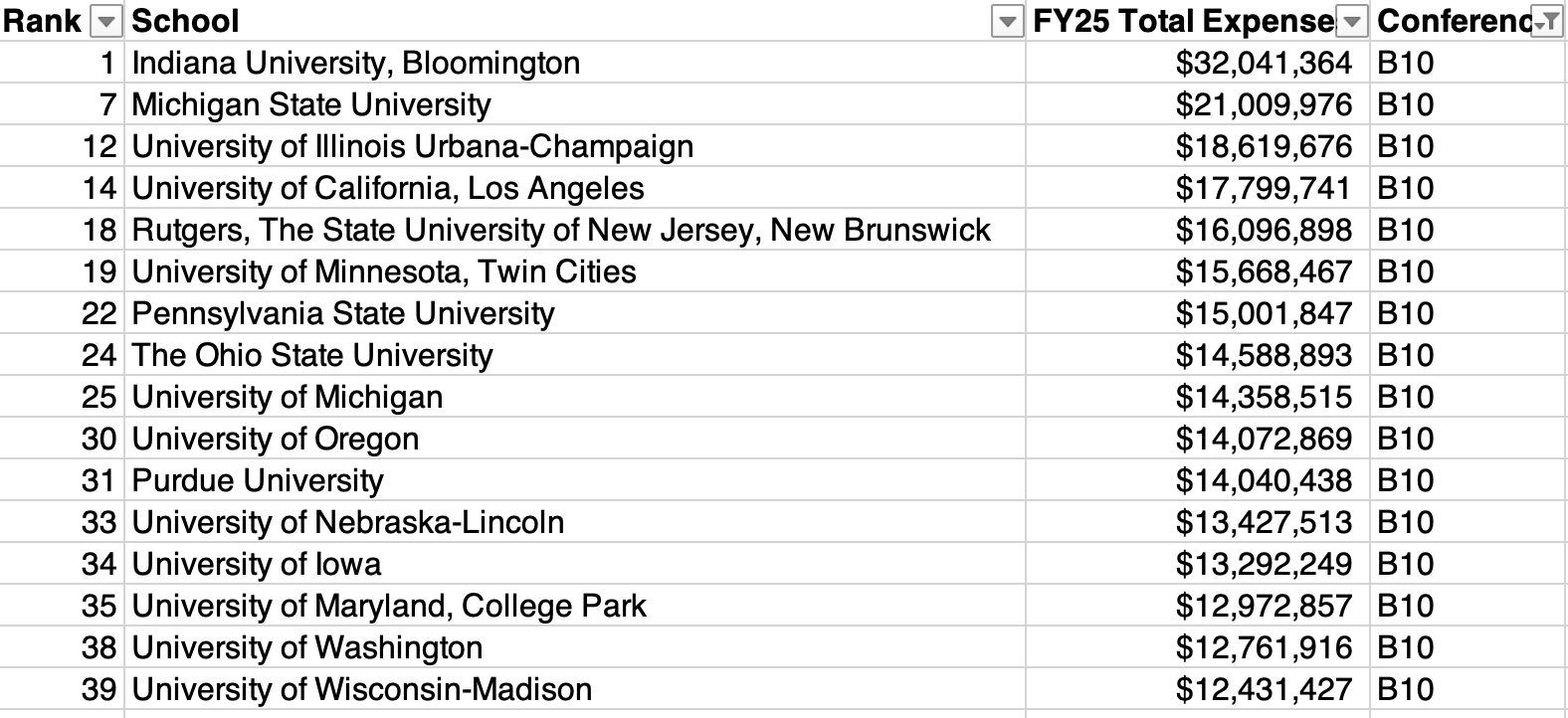
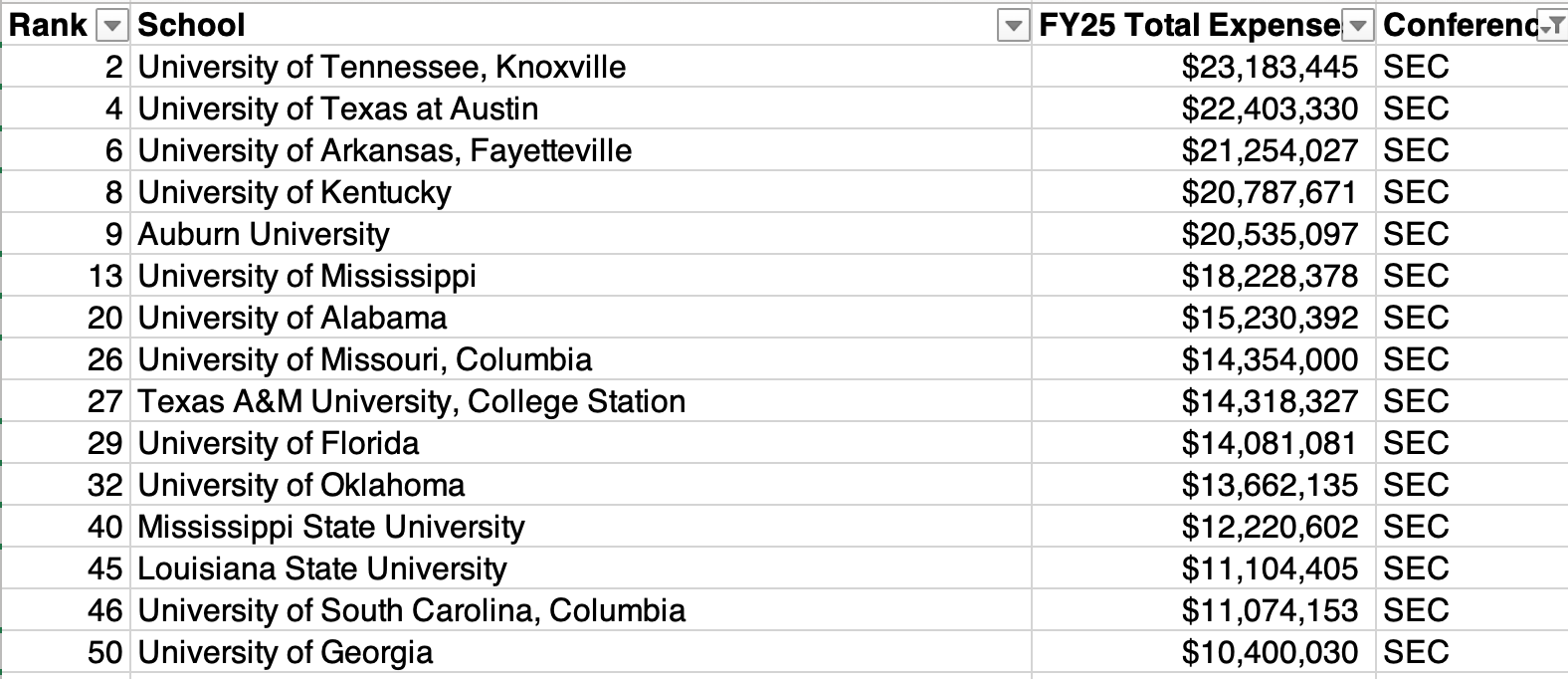
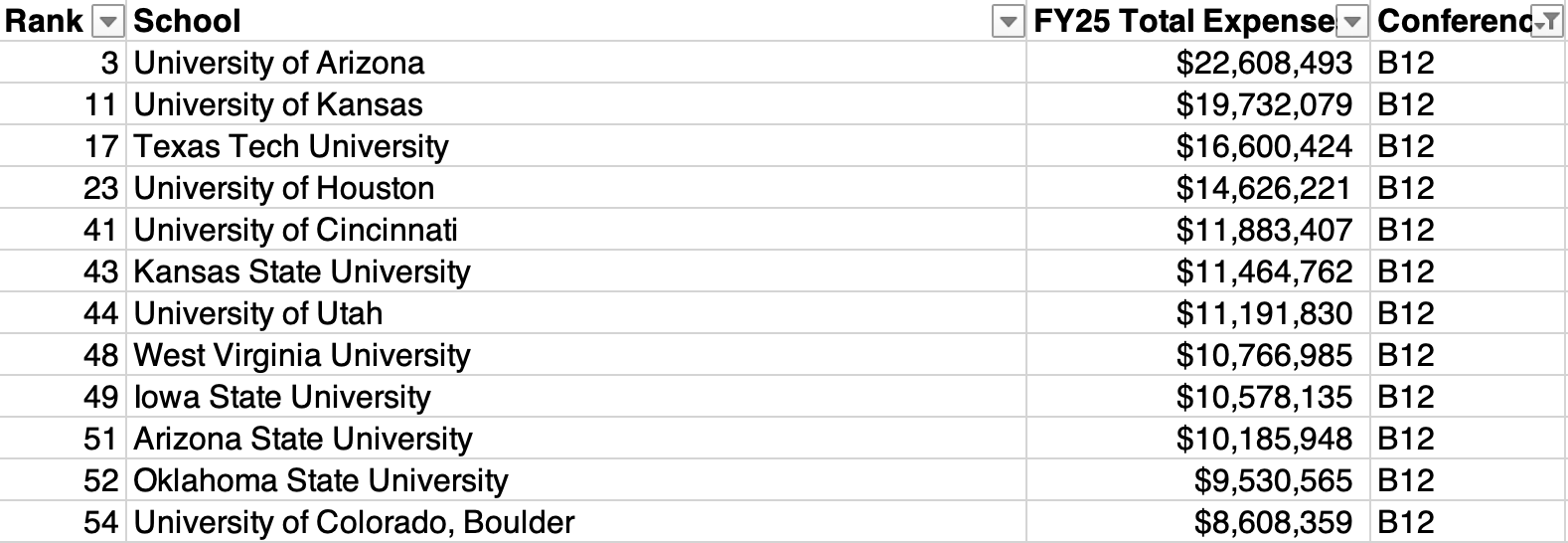
Matt Brown of Extra Points recently broke down the 2024-2025 budgets of men’s basketball programs.13 See Appendix for school-by-school breakdown.
All Big Ten programs are in the top 40.14
All SEC teams are in the top 50, including 5 of the top 10.15
All ACC teams are in the top 45, although there is data for less than half of the programs.
All Big 12 teams are in the top 55.16
Connecticut ranks 5th, but there is no data for any other Big East school.
Programs in the new PAC-9 rank no higher than 53rd, although there is no data for Gonzaga, the best basketball school.
No other conference has a program above 47th (Memphis from the AAC)
As expected, the Big 10 and SEC dominate. Of the teams I have in my top tiers, that is a positive sign for Kentucky, Florida, and Michigan State, plus a potential revival for Indiana and UCLA.
The ACC and Big 12 are a step below. But it is undeniable that the Big 12 is the stronger basketball conference at the moment. It is also the stronger football conference currently, which may have future financial implications.
Arizona was third in spending, exceeding both UNC and Kansas. This came as a bit of a shock to me but current Athletic Director Desireé Reed-Francois, has stated that Arizona “will be aggressive” to support programs. This has included recent naming rights deals for Arizona Stadium and McKale Center and I would expect a jersey patch deal to be announced soon.
All this is to say, are we sure that North Carolina (15) or Kansas (11) is a better job than Arizona today? Neither is in a better conference than Arizona, neither has had more success over the past four years than Arizona17, and neither is in a better financial situation than Arizona.
Paying a coach’s buyout is more interesting than ever. Even if these programs waited until after the April 15th date that effectively rolls the season over to the next year, they would be paying Arizona $9,000,000 to get Coach Lloyd out of his contract. That is more than half of UNC’s annual budget and nearly half of Kansas’s.
Traditionally, this would come from a willing donor. But said willing donor is also likely one of the funders of the NIL pool. There’s a robbing Peter to pay Paul element here. As part of a commitment to move to a new school, a good coach wants money for himself, money for his assistants, and now money for his players, not to mention that the facilities improvement “keeping up with the Jones’s” obligation has not gone away.
I hope Coach Lloyd stays at Arizona for a long time. If he chooses to leave because he was once a 7-year-old kid that watched Michael Jordan hit a jumper to win a National Championship and thought maybe one day I’ll be the new Dean Smith, I wouldn’t blame him. But that’s what he would be leaving for, the nostalgia.
Hopefully, next week there is a 7-year-old somewhere that is watching the Wildcats hoist a trophy and imagining being Tommy Lloyd at Arizona someday. Bear Down. Go Cats!
Appendix


Next Game: vs Arkansas on Thursday, March 26th, 6:45PM MST.
And for those that are inclined to look at the game this way, covered the spread.
While also giving up 14 points on 9 possessions to the Aggies.
I don’t know if this necessarily means “Most Valuable” or not.
I don’t know why they weren’t switching everything especially the guards up front. And you have to make the opponent catch it coming back to the passer.
Who played at Phoenix Sunnyslope HS.
Tease for a future article.
You can challenge block/charge only on the basis of the restricted arc, and not in the last two minutes where it is triggered by official review. Goaltending and basket interference are handled similarly while out of bounds always must be challenged.
Could you argue that an out-of-bounds overturn in the final seconds of the game is worth more than 1.0 points, maybe. But it is a very narrow case.
Lloyd’s 2024 contract amendment may have added a clause that prohibits him from going to Kansas. Non-competes are not always legally air tight though.
This is based on a mix of historical success, recent success, and projection moving forward.
No longer as relevant, but still historically important.
Arizona is the only program in this group without multiple national titles so it is probably towards the bottom of this group; however, I don’t see any other teams in this tier being a huge jump up from Arizona, especially when projecting success moving forward.
This list excludes private schools like BYU or Duke.
No data for Northwestern or USC.
No data for Vanderbilt.
No data for Baylor, BYU, TCU, and UCF
In 2021-2022, Kansas beat North Carolina in the National Title Game so I’m being a little picky with my choice for “recent”, but seriously these programs have not done well after that. Hence, why they are both willing to make a change it would seem.